The Problem With Seasonal Storage
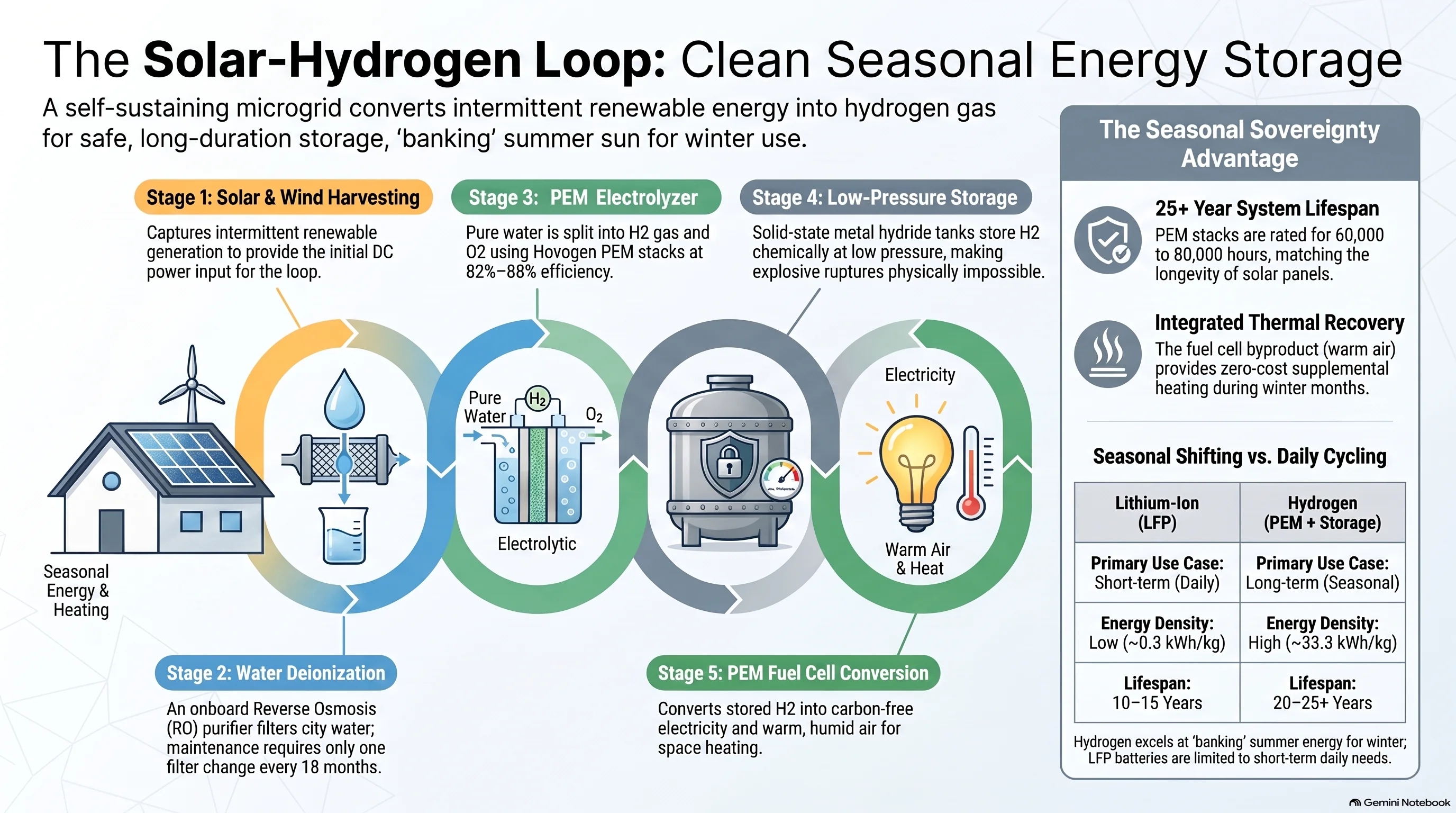
Batteries are great for a day or two of backup. They are hopeless at storing July's surplus solar for January's heating load — you would need a garage full of cells. Hydrogen solves that. A self-sustaining microgrid converts intermittent renewable energy into hydrogen gas, which is stored safely at low pressure and converted back to electricity (or heat) when the sun is scarce. This is written for homeowners around Flagstaff, AZ who are looking into off grid solar systems and want the honest version rather than a sales page.
How the Loop Works
In the summer, surplus solar powers an electrolyzer that splits water into hydrogen and oxygen. The hydrogen is compressed and stored — in tanks, or in metal hydrides that hold it safely at low pressure without the extreme pressures of compressed gas. In winter, a fuel cell converts the stored hydrogen back into electricity, banking months of sunshine for the darkest weeks of the year. The only byproduct is water.
The short version
- The article argues batteries cannot economically bank July's surplus solar for January's heating load, since that would require a garage full of cells.
- In summer, surplus solar powers an electrolyzer that splits water into hydrogen and oxygen, stored at low pressure in tanks or metal hydrides.
- In winter, a fuel cell converts the stored hydrogen back into electricity, with water as the only byproduct of the round trip.
- Metal-hydride storage and solid-oxide fuel cells are commercially available today and form the centerpiece of the emerging seasonal-storage category.
- The piece frames the solar-hydrogen loop as the route to true year-round energy independence for cold-climate homes with long, dark winters.
This is not a distant concept: metal-hydride storage and solid-oxide fuel cells are commercially available today, and the technology is the centerpiece of the emerging "seasonal storage" category. For homeowners in cold climates with long, dark winters, the solar-hydrogen loop is the path to true year-round energy independence.