The Storage Engine: How Battery Chemistry Evolved From Liquid to Solid Electrolyte
Every solar-plus-storage system in Flagstaff rests on a chemical decision that never appears on a quote sheet: what actually carries the charge inside each cell. Two batteries can look identical on the outside and behave completely differently inside, because the material sitting between the electrodes decides how safe the unit is, how much energy fits in the space available, and how many years it keeps working.
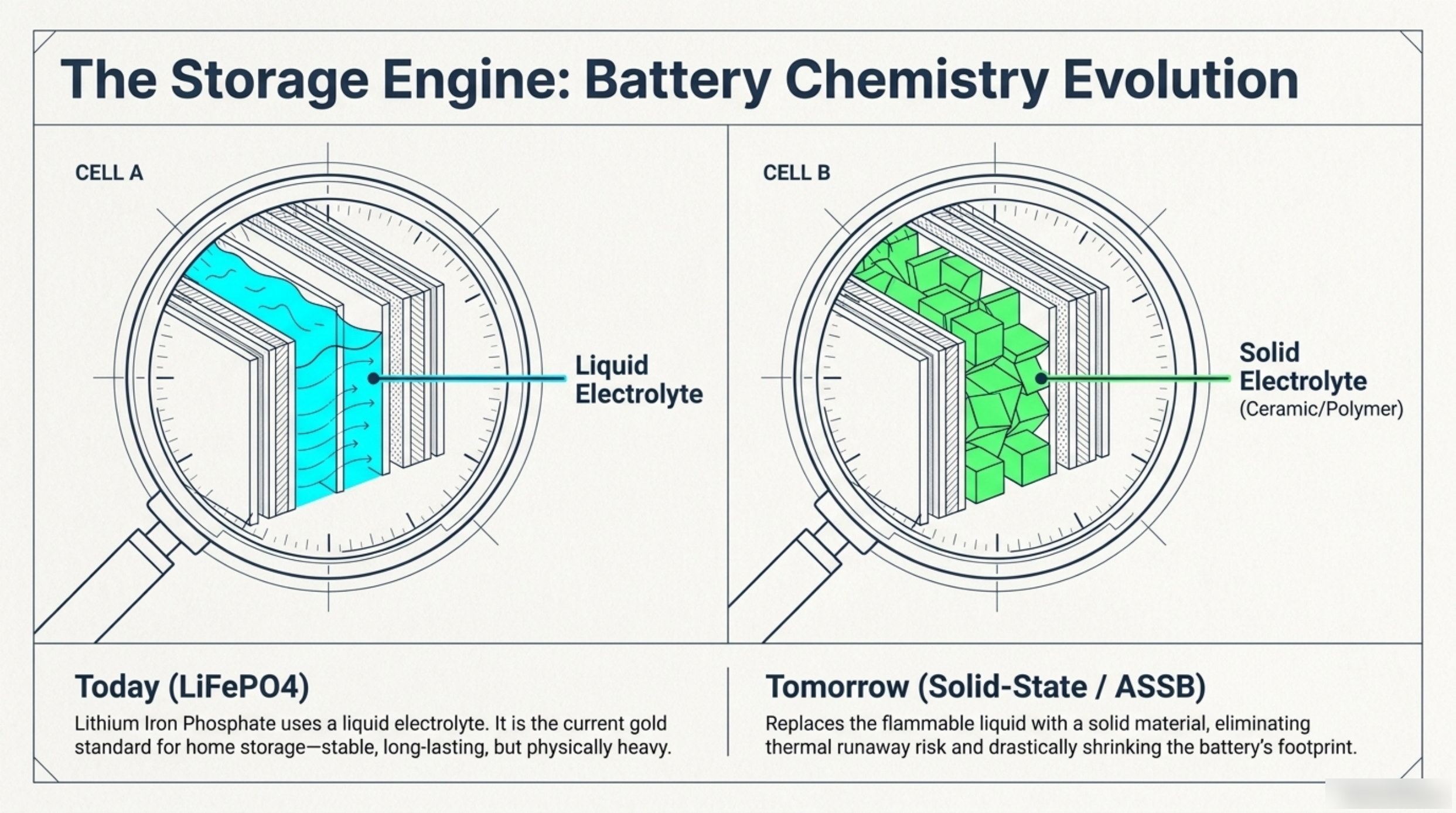
The slide above, from the Blueprint for Energy Independence deck, reduces that decision to two columns. Today's home batteries use a liquid electrolyte in lithium iron phosphate cells, or LiFePO4. Tomorrow's candidate replaces that liquid with a solid ceramic or polymer material, which is why it is called a solid-state battery. The shift sounds technical, but the consequences are practical: a different fire risk profile, a different physical footprint, and a different design requirement for the wiring already in your garage.
The short version
- Lithium iron phosphate with a liquid electrolyte is today's standard for home storage: stable, long-lasting, and physically heavy.
- Solid-state (ASSB) cells swap the flammable liquid for a solid material, eliminating thermal runaway risk.
- The same change drastically shrinks the battery's footprint, because solid cells pack more energy into the same volume.
- Neither chemistry is a mystery box. The material choice is disclosed, and it drives the warranty and the safety clearance your installer plans around.
- What you control today is whether the rest of the system can accept the cells you will be able to buy next.
What the Electrolyte Actually Decides
An electrolyte is the medium that lets lithium ions travel between the two electrodes of a cell during charging and discharging. In a liquid design, that medium is a solvent-based formulation that soaks a separator. In a solid design, it is a ceramic or polymer sheet that is physically rigid. Both move ions. Only one of them can catch fire on its own.
That single material difference cascades into three things a homeowner feels. The first is risk. A liquid electrolyte is flammable, which is why every lithium battery installation includes thermal management, spacing rules, and clearance from combustibles. Remove the liquid and you remove the fuel, which is the entire safety argument behind solid-state cells. The second is density: how much stored energy fits in a given wall area or floor corner. The third is longevity, because degradation in a liquid cell is tied to side reactions at the electrode surfaces, and a solid interface changes how those reactions play out.
Today's Standard: LiFePO4 With a Liquid Electrolyte
The deck is blunt about the current answer: lithium iron phosphate using a liquid electrolyte is the gold standard for home storage. It is stable, it is long-lasting, and it is physically heavy. That last adjective is not a criticism so much as a planning note. The weight is the price of a chemistry that has been proven in residential service for years and is available off the shelf from multiple suppliers today.
| Cell design | Electrolyte | Safety profile | Space and weight |
|---|---|---|---|
| LiFePO4, today’s standard | Liquid solvent | Flammable, so thermal management and clearance rules apply | Heavy, with more packaging per unit of stored energy |
| Solid-state (ASSB), tomorrow | Ceramic or polymer solid | Eliminates thermal runaway risk | Drastically shrinks the footprint |
Stability is the headline benefit. LiFePO4 chemistry resists the kind of exothermic failure that made older lithium chemistries notorious, which is why it is what a reputable installer will quote you without hesitation. Long life is the second benefit: the cycle life of a lithium iron phosphate battery is measured in thousands of full charge and discharge cycles rather than hundreds, so a properly sized unit can still be working after the solar array above it has been through a decade of high-country weather.
The trade is physical. If your utility space is a tight corner of a garage, a narrow hallway closet, or a spot under a stairwell, that bulk is the constraint your design has to respect, not an afterthought.
Tomorrow's Candidate: Solid Electrolyte Cells
The right-hand column of the slide describes the successor. A solid-state cell replaces the flammable liquid with a solid material, ceramic or polymer, which eliminates thermal runaway risk and drastically shrinks the battery's footprint. Eliminating thermal runaway is not a marginal improvement. Thermal runaway is the failure mode that drives the clearance rules, the ventilation requirements, and the enclosure standards around today's batteries. Take the fuel out and the safety envelope changes.
Shrinking the footprint matters just as much in a home. Energy density in a solid cell can be far higher than in a liquid cell of the same size, which means the same usable capacity in a smaller box, or more capacity in the space you already have. Both outcomes are good news for a homeowner who wants a battery but has nowhere obvious to put a large one.
The honest caveat is timing. Solid-state cells are not on the residential shelf, and the deck places them in the coming decade rather than in the current selling season. Anyone promising you a solid-state home battery installation next month is selling a story, not a product.
Why This Matters in APS Territory
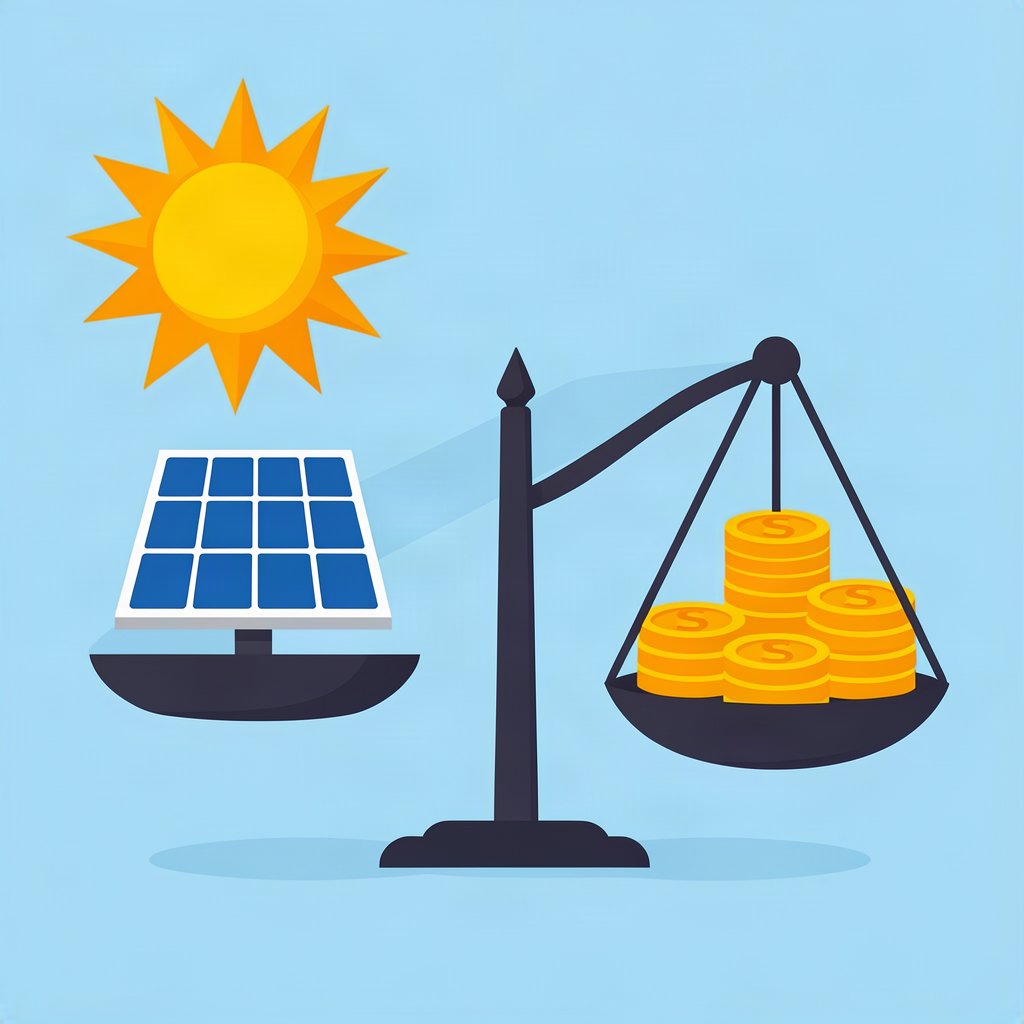
Flagstaff homes sit in APS service territory, where the economics of exporting solar power have been tightening for years. Compensation for power you push to the grid is moving toward avoided-cost style credits rather than a like-for-like offset, while power you import during the evening peak stays expensive. That combination is exactly what makes storage chemistry a financial question and not just an engineering one.
Storage exists to move your own midday solar generation into your own evening load, and the amount of that energy a given unit can hold and dispatch is a function of chemistry and capacity, not brand marketing. A chemistry that packs more usable energy per unit of space and weight lets a smaller number of units cover the same evening window.
How to Plan for a Chemistry You Cannot Buy Yet
The practical move is not to wait. It is to make today's installation indifferent to tomorrow's cells. That means a design where the inverter and the direct-current coupling between array and battery are already capable of accepting a battery, even if the battery is added later. When the wiring topology is right, a future chemistry swap is a component replacement rather than a rewiring project.
Concretely, three questions belong in every Flagstaff quote review. Does the design use a hybrid inverter capable of battery-ready operation, or a string inverter that would need to be replaced to accept storage at all? Is the battery connection direct-current coupled at the system level so that a different battery model can be introduced later? And is the physical location chosen for the equipment sized for a denser, smaller unit, which is the direction the industry is moving?
If you want a second set of eyes on those answers before you sign, the independent matching service behind this site connects Flagstaff homeowners with licensed, insured Arizona installers who will put the answer in writing. Call (928) 698-6192, or work through the calculators in the tools hub to size the storage you actually need before you talk chemistry with anyone.
Frequently Asked Questions
Is a liquid-electrolyte lithium battery unsafe in my home?
No. A modern lithium iron phosphate unit with a liquid electrolyte is a mature, stable product and is the chemistry a certified installer will recommend today. The liquid is flammable, which is precisely why installation standards require thermal management, correct clearances, and a properly chosen location. Those requirements exist to keep the risk managed, and they are the reason your quote includes an equipment placement plan rather than a bare box price.
Should I wait for a solid-state battery instead of buying now?
Waiting has a cost. Every month without storage is a month of exported midday solar earning a low credit while evening power is bought back at peak prices. The deck's own recommendation is to install today using a battery-ready direct-current coupled architecture, so the array and inverter are already prepared for a denser, safer cell when residential solid-state availability arrives in the next decade.